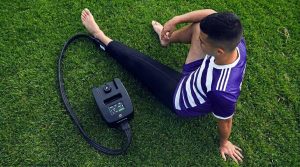
For athletes, recovery isn’t a luxury; it’s a critical component of training. The difference between a personal best and a sidelining injury often comes down to how effectively the body repairs itself after intense effort. The market is saturated with gear, from massage guns to compression boots, all promising to accelerate your return to peak performance.
If you’re thinking, “I’m training hard but my recovery isn’t keeping up, what gear actually helps me bounce back faster?” you’re asking the right question.
This guide will walk you through today’s top recovery tools, what works, what doesn’t, and how to choose gear that accelerates healing. We will explore the science behind recovery equipment and explain why Cryon-X systems outperform traditional methods for muscle repair, swelling reduction, and performance recovery. We will focus on the best recovery equipment for athletes that is backed by science, not just marketing hype.
The Science of Recovery: Why Muscle Recovery Time Matters
Before diving into the equipment, it’s essential to understand the goal: reducing muscle recovery time. Intense exercise causes microscopic tears in muscle fibers. This damage triggers an inflammatory response, which is the body’s natural process for repair and adaptation. The quicker and more efficiently this process occurs, the faster an athlete can return to high-intensity training.
There are two primary factors that determine effective recovery:
- Waste Removal: Intense exercise produces metabolic byproducts and cellular debris. Efficient circulation is needed to flush these from the muscles. It’s a common misconception that lactic acid causes lingering soreness; in reality, lactate is cleared quickly after exercise and is not the cause of Delayed Onset Muscle Soreness (DOMS).
- Tissue Repair: The delivery of oxygen and nutrient-rich blood is crucial for rebuilding damaged muscle tissue.
The best recovery equipment for athletes targets one or both of these factors.
Breaking Down Muscle Recovery Equipment
The landscape of recovery tools is diverse, but most fall into a few key categories. Understanding the mechanism of each can help you make an informed choice.
1. Percussive and Vibration Therapy (Massage Guns)
Massage guns deliver rapid, short-amplitude pulses deep into the muscle tissue.
- How They Work: The primary benefit is promoting blood flow to the targeted area and reducing muscle stiffness. Studies show that percussive therapy can significantly relieve perceptions of muscle soreness and increase the range of motion.
- Effectiveness: They are excellent for short-term relief and improving flexibility before and after workouts. However, evidence is mixed on their ability to fundamentally accelerate physiological muscle recovery compared to other methods. They are best used as a daily tool for targeted relief.
2. Full-Body Cold Immersion (Ice Baths)
The traditional ice bath involves immersing the body in cold water (typically 50-59°F) for 10 to 15 minutes.
- How They Work: The cold causes vasoconstriction, reducing blood flow and inflammation. Upon exiting the bath, the blood vessels rapidly dilate, theoretically flushing metabolic waste.
- Effectiveness: While ice baths reduce the perception of soreness, the long-term benefit is controversial. Some research suggests that excessive cold exposure may blunt the beneficial inflammatory response needed for muscle adaptation and growth. They are a systemic tool, but not always the best for athletes focused on maximizing gains.
3. Static and Dynamic Compression
Compression therapy involves applying external pressure to the limbs, ranging from static socks to dynamic pneumatic boots.
- How They Work: Compression mechanically assists the circulatory system. It helps prevent fluid buildup (edema) and accelerates the removal of metabolic byproducts that contribute to stiffness. Dynamic systems use sequential inflation to actively “milk” waste products out of the limbs.
- Effectiveness: Compression is one of the most consistently supported methods for reducing muscle soreness and improving perceived recovery.
The Gold Standard: Combining Cold and Compression
While each tool offers benefits, the most effective strategy for the best recovery for athletes is the combination of cold and dynamic compression. This synergy addresses pain, swelling, and metabolic waste removal simultaneously.
The Science of Cold Compression Therapy
Cold compression therapy works by leveraging two proven physiological mechanisms:
- Vasoconstriction (Cold): The cold reduces tissue temperature, which constricts blood vessels. This limits the inflammatory response and significantly lowers nerve conduction velocity, providing powerful, localized pain relief.
- Mechanical Pumping (Compression): The pressure from the compression actively pushes fluid and waste products out of the area, preventing excessive swelling and accelerating the return of fresh, oxygenated blood.
This dual-action approach is superior to using cold or compression in isolation, making it a cornerstone of effective muscle recovery equipment.
Why Cryon-X Outperforms Traditional Methods
Traditional cold compression involves an ice pack secured with an elastic wrap. While this is better than nothing, it suffers from major limitations:
- Inconsistent Temperature Control: An ice pack quickly melts, leading to fluctuating temperatures. Cryon-X units maintain a precise, therapeutic temperature throughout the entire treatment session.
- Static vs. Dynamic Pressure: Elastic wraps provide static, uneven pressure. Cryon-X employs a pneumatic system to deliver intermittent, sequential pressure. This dynamic “milking” action is far more effective at pushing edema out of the muscle tissue.
- Anatomical Coverage: Traditional methods often fail to provide uniform coverage. Specialized Cryon-X wraps are designed to contour precisely to major muscle groups and joints.
The Future of Recovery: Contrast Therapy
Many athletic trainers are moving away from simple icing and toward contrast therapy, which alternates between controlled cold and heat. This creates a “vascular pump” effect that is even more powerful for flushing waste and delivering nutrients.
While thermotherapy (heat) is usually used before practice or competition to increase tissue extensibility, using it in a contrast cycle after the acute phase of injury can significantly speed up the healing curve. The Cryon-X Pro is specifically designed for this, offering fully programmable contrast therapy in one iceless unit.
Choosing the Best Recovery Equipment for Athletes
When selecting muscle recovery equipment, consider the following:
| Recovery Tool Category | Primary Mechanism | Best For | Limitation |
|---|---|---|---|
| Massage Guns | Increased local blood flow | Daily, targeted stiffness relief | Mixed evidence on deep tissue repair |
| Ice Baths | Systemic inflammation reduction | Occasional systemic recovery | Can potentially blunt muscle adaptation |
| Static Compression | Passive reduction of fluid build-up | Travel or long periods of inactivity | No active waste removal |
| Cryon-X Units | Precise cold + dynamic compression | Daily soreness, post-injury, and contrast therapy | Designed for targeted treatment |
For athletes dedicated to minimizing muscle recovery time and maximizing performance gains, the focus should be on tools that provide both effective waste removal and optimal conditions for tissue repair.
Take the First Step Toward Fast Relief
The best recovery equipment for athletes is the gear that consistently and reliably supports your body’s natural healing process. Cryon-X cold compression units are not just another piece of muscle recovery equipment; they are a strategic investment in your performance. By providing superior, controlled cold and active compression, they create the optimal physiological environment to shorten muscle recovery time and ensure you are ready for your next session.
Don’t let slow recovery be the limiting factor in your athletic career. Embrace the science-backed power of dynamic cold compression and contrast therapy.